Lesson 3
Matching light and growing location
How much light each group of carnivorous plants needs, how to judge what a windowsill really provides, and when a grow light is the honest answer.
If a carnivorous plant is failing and the water is right, light is the next thing to check. Most of the plants in this library come from open, sunny habitats: bogs, savannas and rock faces with nothing taller than grass around them. They are adapted to far more light than the average house provides, and the symptoms of too little light are easy to misread as something else.
What too little light looks like
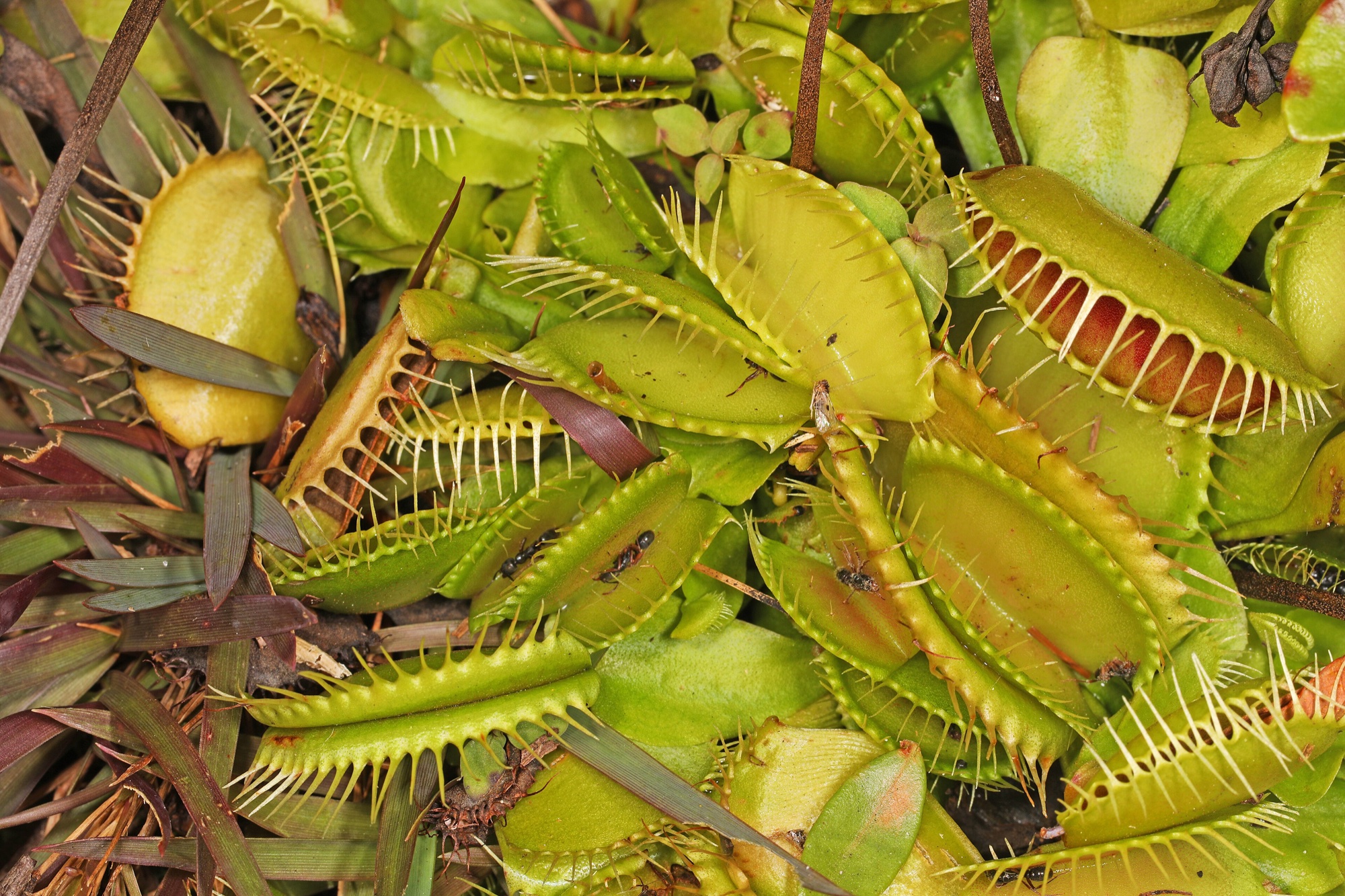
- Long, thin, pale growth. Leaves stretch towards the light and lose colour. On a Venus flytrap the leaf stalks lengthen and the traps shrink; on a Sarracenia the pitchers grow tall, narrow and flop over.
- No red colouring where the species would normally show it, such as flytrap trap interiors or sundew tentacles. Some all-green cultivars exist, so judge against what the plant looked like when it was healthy.
- Sundews without dew. Mucilage production falls off sharply in low light.
- Nepenthes making leaves but no pitchers. Low light is one of the two main causes, along with low humidity.
- Slow decline with no rot and no pests. The plant is simply not making enough energy.
Light-starved plants are also more prone to rot, because a plant that is not growing cannot use the water it sits in.
Judging a location
Measure rather than assume. Watch a potential spot for a day in the growing season and count the hours of direct, unobstructed sun. Then adjust:
- Glass costs light. A window removes some light even when clean, and the angle of the sun means a windowsill receives direct sun for fewer hours than the sky outside suggests. A south-facing sill in the northern hemisphere is the best indoor spot in temperate latitudes; east and west sills give a few hours of weaker sun; north-facing sills give none.
- Distance matters enormously. Light falls off quickly with distance from the glass. A plant a metre back from a window is in a different climate from one touching it.
- Seasons change everything. A sill that is bright in June may receive almost no direct sun in December, which is one reason temperate species rest in winter.
A simple test is to hold your hand above the plant at midday: a sharp, dark shadow means direct sun; a soft grey shadow means bright indirect light; no clear shadow means the spot is too dim for anything in this library except possibly a butterwort.
Light by group
| Group | Minimum for health | Ideal |
|---|---|---|
| Venus flytrap | Several hours of direct sun | Full sun outdoors, 6+ hours |
| Sarracenia | Several hours of direct sun | Full sun outdoors, all day |
| Temperate sundews | Several hours of direct sun | Full sun outdoors |
| Drosera capensis | Bright sill with some sun | Several hours of direct sun |
| Nepenthes ventricosa | Bright indirect light | A few hours of gentle sun or a grow light |
| Mexican butterworts | Bright indirect light | A few hours of sun |
| Terrestrial bladderworts | Bright sill | Several hours of sun or a grow light |
These are editorial summaries; each species profile explains the particular plant.
Outdoors
For Venus flytraps, Sarracenia and temperate sundews, outdoors in full sun is the simplest route to a healthy plant in a temperate climate, and it solves dormancy at the same time. Choose a spot that gets sun from morning to mid-afternoon at least, shelter pots from strong wind so the tray does not blow dry, and expect the plants to catch their own food. Move plants outdoors gradually in spring, a few hours a day at first, because leaves grown indoors scorch in sudden full sun.
Grow lights
For indoor growing, a grow light is often the honest answer, and it is no longer expensive. Points that matter:
- Full-spectrum white LED panels or strips sold for houseplants or seedlings work well; you do not need specialist red and blue lamps.
- Distance is the main variable. Light intensity falls quickly with distance, so most growers hang lamps 15 to 40 cm (6 to 16 in) above the plants and adjust by watching for scorch (too close) or stretching (too far).
- Duration: 12 to 16 hours a day in the growing season, on a timer. Temperate species that need dormancy should have the day length shortened in autumn, or be moved somewhere cold and dim.
- Heat: LEDs run cool but still raise temperatures in an enclosed space; check the plants are not cooking.
A plant moved from a dim sill to a grow light will usually show new, more compact, better-coloured growth within a few weeks. The old leaves will not change; judge by what comes next.
Humidity is not a substitute
New growers often enclose a struggling plant in a terrarium to raise humidity. For most of the plants here, humidity is a minor factor and light is the major one; a sealed, dim container makes things worse. The exceptions are Nepenthes, which do appreciate moderate humidity, and even they need light first.
The final lesson of the path explains dormancy, the winter rest that separates the plants you can grow indoors year-round from those you cannot.
Sources
References for the facts on this page.