Lesson 1
Choosing a suitable first plant
How to pick a carnivorous plant that will succeed in the conditions you actually have, and why the famous one is not usually the easiest.
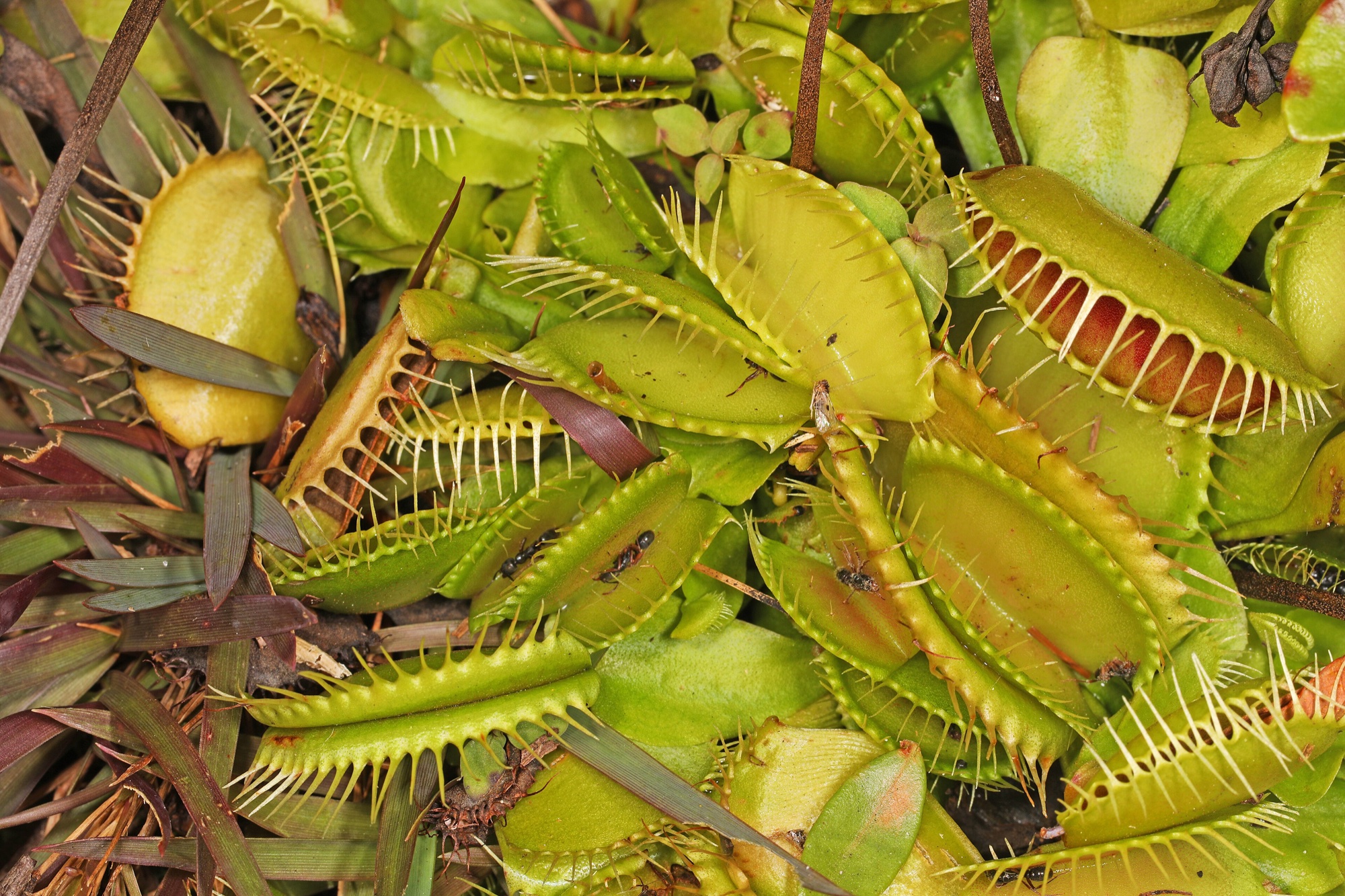
Most people’s first carnivorous plant is a Venus flytrap bought on impulse, and most of those plants are dead within the year. That is not because the species is impossible. It is because nobody matched the plant to the place it was going to live. This lesson is about doing that matching before you buy.
What “carnivorous plant” covers
The term describes several unrelated groups of plants that all evolved to trap and digest animals, mostly insects, to supplement the nutrients their poor, wet soils cannot supply. The plants you are most likely to meet belong to six genera (a genus is the group name that comes first in a scientific name, such as Drosera):
- Venus flytrap (Dionaea): a single species with snap traps.
- Sundews (Drosera): leaves covered in sticky glands.
- North American pitcher plants (Sarracenia): upright or squat pitchers that insects fall into.
- Tropical pitcher plants (Nepenthes): vines with hanging pitchers.
- Butterworts (Pinguicula): flat, greasy leaves.
- Bladderworts (Utricularia): tiny suction traps hidden in soil or water.
They share two needs: mineral-poor water and a mineral-poor growing medium. Almost everything else differs between groups, which is why “carnivorous plant care” as a single recipe fails.
Three questions to answer first
How much direct sun can you give?
Be honest and measure rather than guess. Stand where the plant will live at midday and count the hours of unobstructed sun the spot gets in summer. A south-facing windowsill behind glass in northern Europe or the northern US typically delivers far less light than the same spot outdoors.
- Six or more hours of direct sun outdoors: almost anything is open to you, including Venus flytraps and Sarracenia.
- A bright windowsill with a few hours of sun: Drosera capensis, Pinguicula moranensis, Nepenthes ventricosa, Utricularia sandersonii.
- A bright room with no direct sun: only the butterworts and Nepenthes are realistic, and a grow light changes the picture entirely.
Can you provide a winter rest?
Temperate species, including Venus flytraps and Sarracenia, must have three to four months of cold each winter. If you can leave the plant outdoors, in an unheated porch or in a cold frame through winter, that is covered. If your only option is a heated room, choose a plant that does not need dormancy: the Cape sundew, Mexican butterworts, Nepenthes or a terrestrial bladderwort.
Where will the water come from?
You will need rainwater, distilled water or reverse-osmosis water, and you will need it all year. A water butt or a few litres of distilled water a month is enough for a small collection. If that is a problem, Nepenthes are the most tolerant of soft tap water, though still not of hard water.
A short list of forgiving species
| Species | Light needed | Dormancy | Why it forgives mistakes |
|---|---|---|---|
| Drosera capensis | Bright, some sun | None | Tolerates a range of light and wetness; regrows from roots |
| Pinguicula moranensis | Bright, some sun | Dry winter rest | Copes with lower light; mineral media; catches gnats |
| Nepenthes ventricosa | Bright, some sun | None | Room temperatures, moderate humidity, tolerant of soft tap water |
| Utricularia sandersonii | Bright, some sun | None | Needs only to be kept wet; flowers constantly |
| Sarracenia purpurea | Full sun outdoors | Cold winter | Very hardy outdoors; low pitchers resist wind |
Each profile in the species library explains its difficulty rating and what makes the plant harder in some conditions than others.
Why the Venus flytrap is listed as intermediate here
The flytrap is not fragile. It is demanding in two specific ways: it wants more direct light than most windowsills provide, and it must have a cold dormancy. Grown outdoors in full sun in a temperate climate, with pure water and a cold winter, it is straightforward. Grown on an indoor shelf and kept warm all year, it declines however carefully it is watered. If your conditions match the first description, go ahead; if they match the second, start with something else and come back to it.
Before you buy
- Buy from a nursery that propagates its own plants or a reputable specialist. Never buy or collect wild plants.
- Check the label gives a scientific name. “Carnivorous plant mix” tells you nothing about care.
- If the plant comes in a sealed plastic dome, plan to remove it at home; the dome is for transport, not for growing.
- Buy one plant and learn it for a season before adding more.
The next lesson covers the two things every carnivorous plant has in common: water and growing medium.
Sources
References for the facts on this page.
- International Carnivorous Plant Society: Growing guides (accessed )
- RHS: Carnivorous plants growing guide (accessed )