Lesson 4
Understanding dormancy and seasonal changes
Which carnivorous plants rest in winter, what the rest looks like so you do not mistake it for death, and practical ways to provide it in different climates.
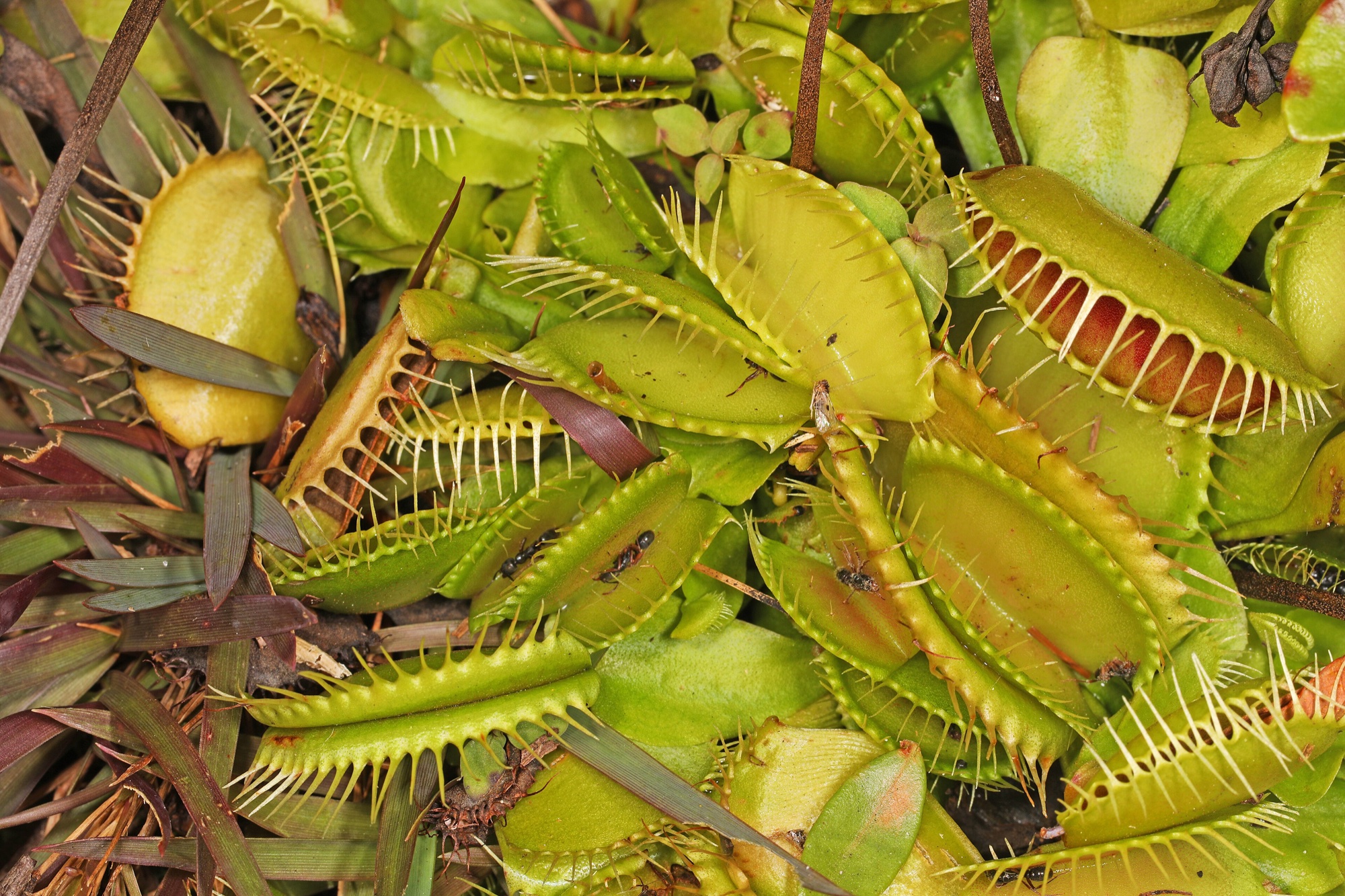
In autumn, a healthy Venus flytrap turns black trap by trap, shrinks to a tight knot of small leaves and stops growing. Many new growers conclude it is dying and move it somewhere warm and bright to save it, which is the one thing that will kill it. Dormancy is the subject that causes the most unnecessary losses, so it is worth understanding properly.
What dormancy is
Plants from places with a cold season stop growing for part of the year and survive on stored reserves. For carnivorous plants from temperate North America and Europe, that rest is triggered mainly by shortening days and falling temperatures in autumn, and it lasts roughly three months for Venus flytraps and Sarracenia, longer for cold-temperate sundews. During dormancy the plant’s metabolism slows, above-ground growth dies back or stops, and the plant waits.
The rest is not simply a response to bad conditions. A temperate species kept warm on a windowsill all year tries to keep growing on reserves it never rebuilds and declines over a few years. Venus flytraps under strong artificial light indoors can be grown continuously, but giving the rest is the safer course, and Sarracenia and temperate sundews should always have it.
Which plants need it
| Needs a cold winter rest | Needs a dry rest instead | Needs no rest |
|---|---|---|
| Venus flytrap (Dionaea muscipula) | Mexican butterworts (Pinguicula moranensis and relatives) | Drosera capensis and other subtropical sundews |
| All Sarracenia | Nepenthes (all species) | |
| Temperate sundews (Drosera rotundifolia, D. anglica, D. intermedia, D. filiformis) | Terrestrial bladderworts (Utricularia sandersonii, U. livida) | |
| Temperate butterworts (Pinguicula vulgaris, P. grandiflora) |
If a species is not listed, its profile in the library states which group it belongs to.
What a dormant plant looks like
- Venus flytrap: traps blacken and die back from autumn; the plant shrinks to a small rosette of short, trapless or tiny-trapped leaves close to the soil. It may look like almost nothing. The white rhizome beneath should still be firm.
- Sarracenia: the tall pitchers brown from the top, often while staying green at the base; the plant may produce flat, trapless leaves (phyllodia). The rhizome stays firm. No new pitchers appear until spring.
- Temperate sundews: the plant stops making open leaves and forms a tight bud of small scales at soil level, the hibernaculum, which looks like a small green or red knot.
- Mexican butterworts: the broad sticky leaves are replaced by a compact rosette of small, thick, non-sticky leaves. This is a dry-season rest, cued by moisture and day length rather than cold.
A dormant plant is firm at the base and not spreading rot. A dead plant is soft, brown and often smells sour. If in doubt, gently feel the rhizome or crown rather than digging the plant up.
Providing a cold rest
The plant needs about three months at cool temperatures, ideally roughly 0 to 10 °C (32 to 50 °F) and in any case chilly rather than warm, with short days and much less water than in summer. Options, from simplest to most involved:
- Outdoors, in the ground or in pots. In climates with cool but not brutal winters, this is the natural solution. Sarracenia purpurea and most Sarracenia tolerate frost well; Venus flytraps tolerate light frost. Protect small pots from freezing solid for long periods by grouping them, sinking them in the ground, or mulching.
- An unheated but frost-free space with light: a porch, conservatory, cold frame, greenhouse or garage window. Water sparingly to keep the medium damp. This suits most growers in temperate climates.
- A refrigerator, for growers in warm climates or apartments. In late autumn, once the plant has slowed, remove it from its pot, trim dead leaves, wrap the rhizome or hibernaculum in slightly damp sphagnum inside a loosely closed bag, and store it in the fridge (not the freezer) for about three months. Check monthly for mould and treat with a sulphur-based fungicide if needed. Repot in spring.
In all cases the two risks are rot, from being too wet and still, and desiccation, from drying out completely. Damp, cold, airy and dim is the target.
Ending dormancy
As days lengthen and temperatures rise in late winter, growth resumes on its own. This is the moment to repot into fresh medium, divide clumps, and move plants back to full light and tray watering. Sarracenia flower first and pitcher later; Venus flytraps produce new traps and often a flower stalk by mid-spring.
The dry rest of Mexican butterworts
Mexican Pinguicula do something different. When their winter rosette of succulent leaves appears, reduce watering to a light watering every few weeks and keep the plant bright; a somewhat cooler spot suits it, but no cold is required. Resume normal watering when sticky summer leaves return. A plant kept steadily moist indoors may never form winter leaves, and that is not harmful.
Plants that skip winter
Drosera capensis, Nepenthes and terrestrial Utricularia need no rest. In short winter days they slow down and may look tired; keep them warm, bright and watered and they continue. Do not force a cold rest on them.
That completes the beginner path. From here, the species library gives the specifics for each plant, and the articles cover method: keeping a growing log, and researching a species that is new to you.
Sources
References for the facts on this page.
- The Carnivorous Plant FAQ: About dormancy requirements (accessed )
- The Carnivorous Plant FAQ: Winter dormancy (accessed )
- International Carnivorous Plant Society: Growing cold temperate Drosera (accessed )
- International Carnivorous Plant Society: Growing Dionaea muscipula (accessed )
- International Carnivorous Plant Society: Growing Mexican Pinguicula (accessed )