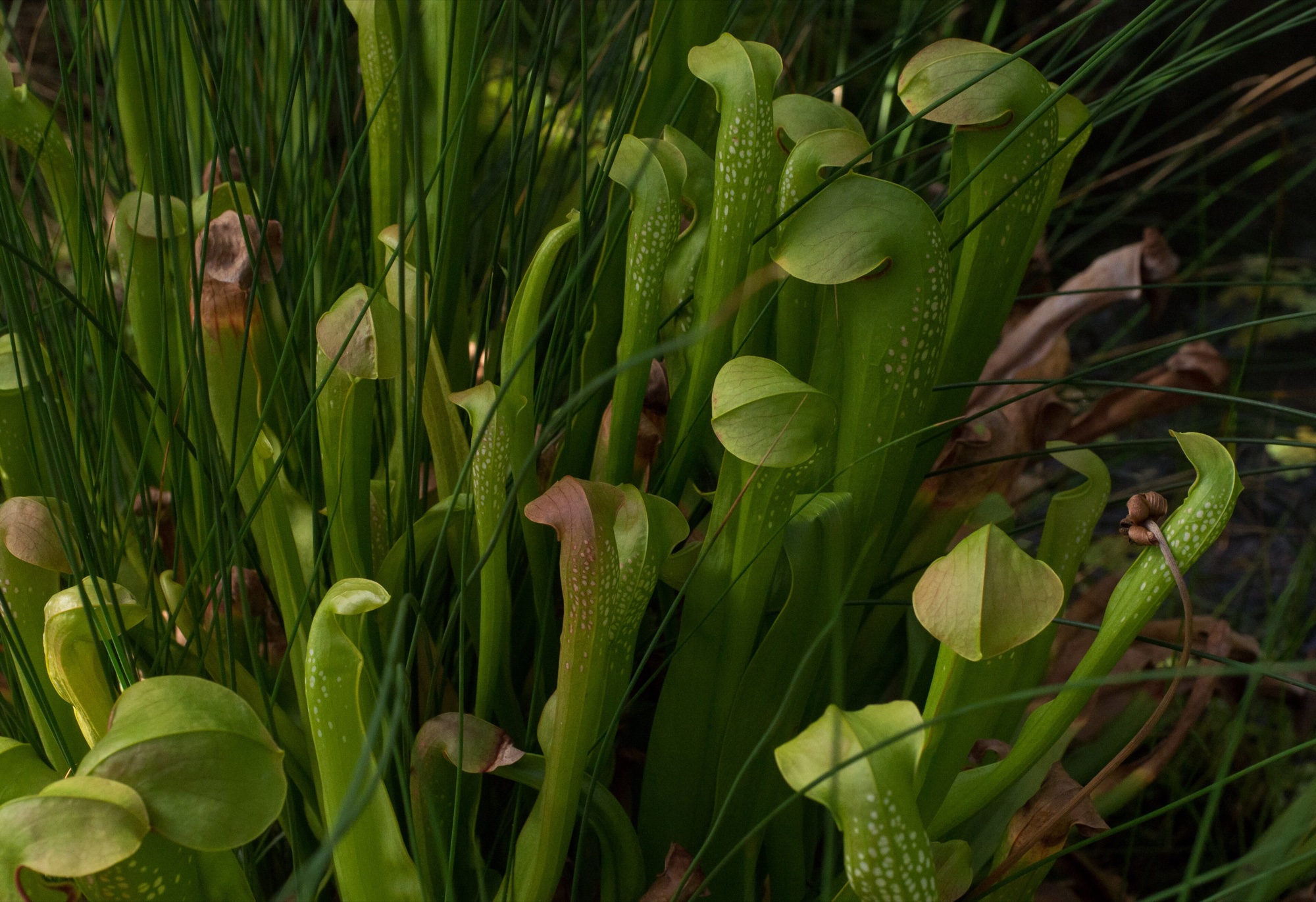
Nepenthes
Nepenthes ventricosa
Nepenthes ventricosa: a highland Philippine pitcher plant with hourglass-shaped pitchers, tolerant of room conditions and one of the easiest indoors.
Nepenthes ventricosaVentricose pitcher plantFamily Nepenthaceae
New to these plants? Read the Nepenthes group introduction first: it explains what the group is, where the plants grow and how the whole group is cared for.
Quick care
BeginnerDifficulty is an editorial assessment for typical home conditions, not a property of the plant.
- Native range
- Philippines, on the islands of Luzon, Panay and Sibuyan, at roughly 1,000 to 2,000 m (3,300 to 6,600 ft) in mossy montane forest and open ridges.
- Light
- Bright light with a few hours of gentle direct sun, or a grow light. Leaves redden in strong light; a plant that stops making pitchers usually wants more light or humidity.
- Water
- Rain, distilled or reverse-osmosis water preferred; more tolerant of low-mineral tap water than most carnivorous plants. Keep the medium moist, never standing in water.
- Growing medium
- Open, airy and well drained: long-fibre sphagnum with perlite, or a mix of sphagnum, perlite and orchid bark.
- Temperature
- Comfortable at room temperatures, roughly 15 to 28 °C (59 to 82 °F). Highland Nepenthes are usually given cool nights of 10 to 16 °C (50 to 60 °F); this species does well without them.
- Humidity and airflow
- Aim for 60 percent or more with gentle airflow; copes with drier rooms better than most Nepenthes. Pitcher production falls in very dry air.
- Dormancy
- None. Grows year-round; slows in low winter light.
- Feeding
- Drop an insect or two into a pitcher every few weeks, or none at all. Very dilute fertiliser may go on the leaves or into pitchers; none in the medium.
Watch out for
- Leaves but no pitchers: low humidity or low light, or a plant recently moved and settling in.
- Brown, crisp leaf tips: dry air or mineral-rich water.
- Pitchers browning and shrivelling within days: the medium dried out.
- Black patches on leaves spreading from the base: waterlogged medium.
- Mealybugs, scale, aphids and thrips hiding in leaf axils and under pitcher lids.
- Orange-brown spots on leaves: rust fungus, mostly cosmetic; never use copper fungicides on Nepenthes.
About this plant
Nepenthes are vines. Each leaf ends in a tendril, and the tip of the tendril swells into a pitcher: a hollow leaf part-filled with fluid, with a slippery rim (the peristome) and a lid. Insects feeding on nectar at the rim slip in and are digested. Nepenthes ventricosa makes compact, waisted pitchers, typically 9 to 16 cm (3.5 to 6.5 in) tall, with no wings down the front, a wide round mouth, a lid much smaller than the mouth, and a broad, coarsely ribbed peristome up to 2.5 cm (1 in) wide whose outer edge is scalloped. Wild plants are creamy white with a red rim; cultivated clones run from pale with red blotches to solid red. Young plants produce pitchers in a rosette. Mature plants climb, to 2 m (6.5 ft) or more in the wild, though the climbing stems stay shorter than those of most Nepenthes.
The species comes from mossy mountain forest in the Philippines, recorded at 1,200 to 1,500 m (3,900 to 4,900 ft) on Luzon, where days are mild and nights cool. In cultivation it has proved far more adaptable than its origins suggest, and it is a parent of Nepenthes × ventrata, the hybrid most often sold in garden centres.
Light
Give bright light with some direct sun, such as an east or west window or a position a little back from a south window, or a grow light for 12 to 14 hours. Leaves blushing red is a good sign; scorched pale patches mean the midday sun is too strong behind glass. Low light produces long leaves, no pitchers and no colour.
Water
Keep the medium evenly moist. Water from the top until it runs through, then let the surface approach dryness before watering again. Do not stand Nepenthes in a tray of water; their roots need air. Rain, distilled or reverse-osmosis water is best, though this species tolerates soft tap water better than most carnivorous plants. A pot that drains and is watered from above can take water up to about 160 ppm of dissolved solids, against a ceiling of about 100 ppm for tray-grown plants, because the minerals are flushed through rather than left behind. Do not let the mix dry right out; the pitchers brown and shrivel within days of the medium drying, even when the vine itself pulls through.
Growing medium
Use something open and quick-draining: long-fibre sphagnum mixed with perlite, or a mix of sphagnum, perlite and fine orchid bark. Dense peat-based mixes stay too wet and the roots suffocate. Hanging baskets and pots with plenty of drainage holes suit the vining habit.
Temperature
Room temperatures suit it well, roughly 15 to 28 °C (59 to 82 °F). The standard highland regime is warm days of about 21 to 27 °C (70 to 80 °F) with a drop to 10 to 16 °C (50 to 60 °F) at night, and for highland species in general that night drop is a requirement. This species is the usual exception: it is widely grown on windowsills, where no such drop happens, and does well there. Give it a cooler night where you easily can, and avoid cold draughts below about 10 °C (50 °F).
Humidity and airflow
Moderate humidity is enough; this is one of the reasons the species is recommended for windowsills. Aim for above 60 percent, with gentle air movement to keep pitchers coming; this species keeps pitchering in rooms that fall short of it better than most Nepenthes. In very dry heated rooms, a tray of pebbles and water nearby, a humidifier or a terrarium-style enclosure with ventilation helps. Stagnant, saturated air encourages fungal spots.
Dormancy
None. The plant grows all year and simply slows in the darker months.
Feeding
Pitchers catch household insects on their own. You can drop a dead insect or two, or a few dried bloodworms, into open pitchers every few weeks in the growing season. Fertiliser is optional. Some growers use an organic feed at about a quarter of the label strength on the leaves and into open pitchers twice a month in the growing season, or give an established plant a single slow-release pellet in one pitcher. Others keep fertiliser out of the pitchers, because it can upset digestion in the fluid and breed algae, and mist the leaves instead. Either approach is in wide use; whichever you choose, keep any feed very dilute and out of the medium, where it damages the roots. The plant does well with no feeding at all.
Repotting
Repot every two or three years, or when the medium breaks down and stays soggy, into fresh open mix. Mass-market plants usually arrive in dense peat or coco peat, and are best moved into an open Nepenthes mix in a slightly larger pot once they have settled in. Nepenthes resent root disturbance less than their reputation suggests if the root ball is kept intact. Stem cuttings root readily in sphagnum. On an older plant, do not cut back a climbing stem until a basal shoot has appeared at the bottom; pruning then encourages more basal growth and yields cuttings.
Common problems
A plant that grows leaves but refuses to pitcher is the classic complaint. The usual causes, in order, are a recent move, low humidity and low light. Give it a stable position and a month or two. Brown tips point to dry air or hard water. Individual pitchers last a few months (longer on slow-growing plants) and then brown from the top; that is ageing, not a fault, and the spent pitcher can be cut off where the tendril meets it. Aphids, mealybugs, scale and thrips are the pests to check for in leaf axils and under lids. Orange-brown spots on the leaves are a rust fungus and mostly cosmetic; copper-based fungicides can kill Nepenthes, so use something else if you treat it at all.
Species-specific notes
Plants labelled Nepenthes ventricosa in shops are often the hybrid Nepenthes × ventrata, which has slimmer, redder pitchers and is equally easy. True ventricosa has the pronounced hourglass waist and a broader, more strongly ribbed peristome. Care is the same. The mass-produced back-cross (ventricosa × alata) × alata is usually sold under the plain label N. alata. Its closest wild relatives, Nepenthes burkei of Mindoro and Nepenthes sibuyanensis of Sibuyan, share the waisted, wingless pitcher but not the tightly pinched, white form of true ventricosa; N. sibuyanensis is a much larger plant.
Sources
References for the facts on this page.
- Clemson Home and Garden Information Center: Tropical pitcher plants (Nepenthes) indoor care (accessed )
- International Carnivorous Plant Society: Growing Nepenthes from seed (accessed )
- Kew Plants of the World Online: Nepenthes ventricosa (accessed )
- Caryophyllales Network, Nepenthaceae: Nepenthes ventricosa (description from Cheek and Jebb 2001, Flora Malesiana) (accessed )
- Jebb and Cheek (1997) A skeletal revision of Nepenthes (Nepenthaceae). Blumea 42(1): 1-106 (accessed )
- Peter D'Amato, The Savage Garden, Revised Edition (Ten Speed Press, 2013), The Tropical Pitcher Plants chapter. ISBN 978-1-60774-410-8