Propagation
Propagating Sarracenia
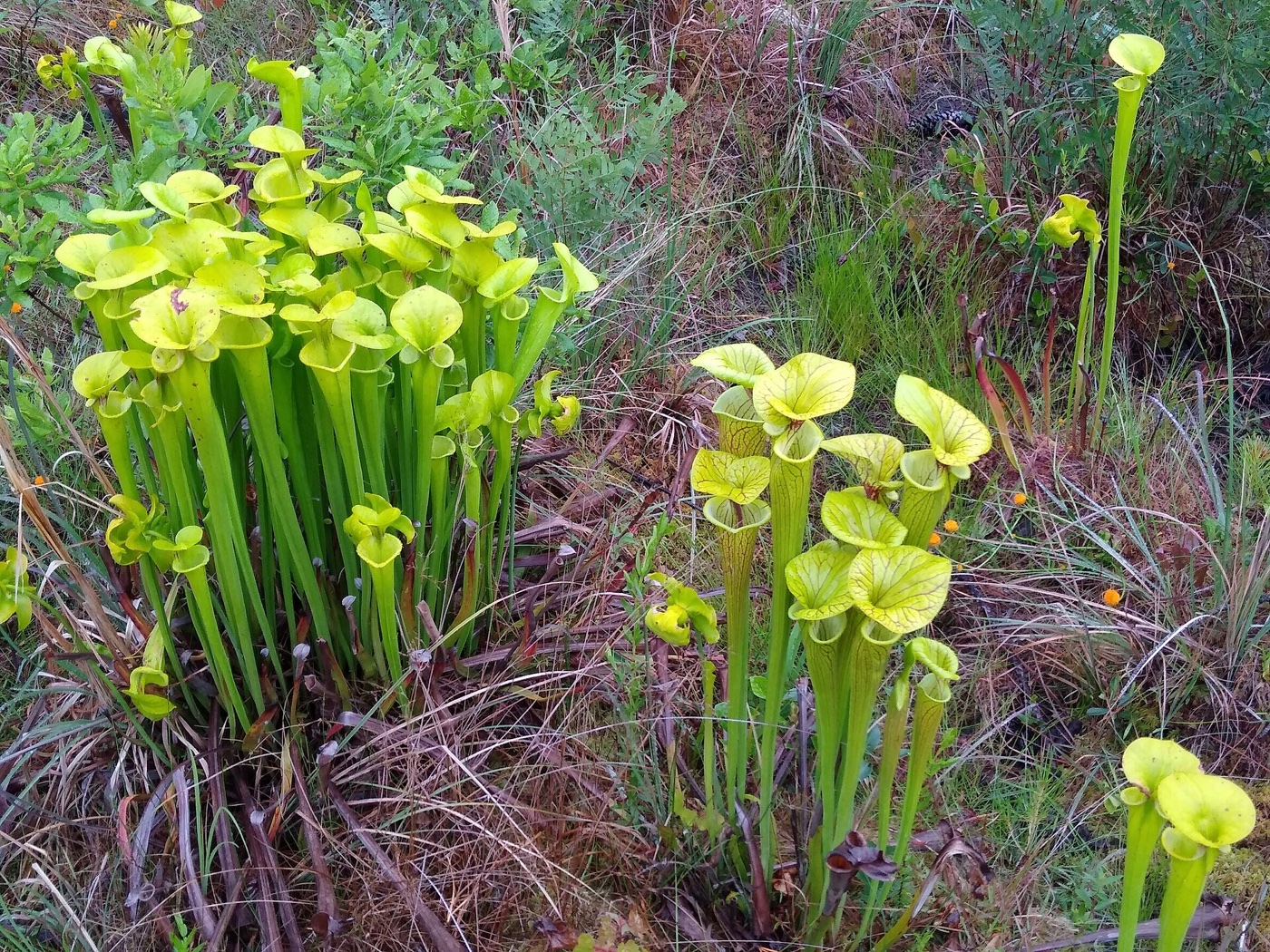
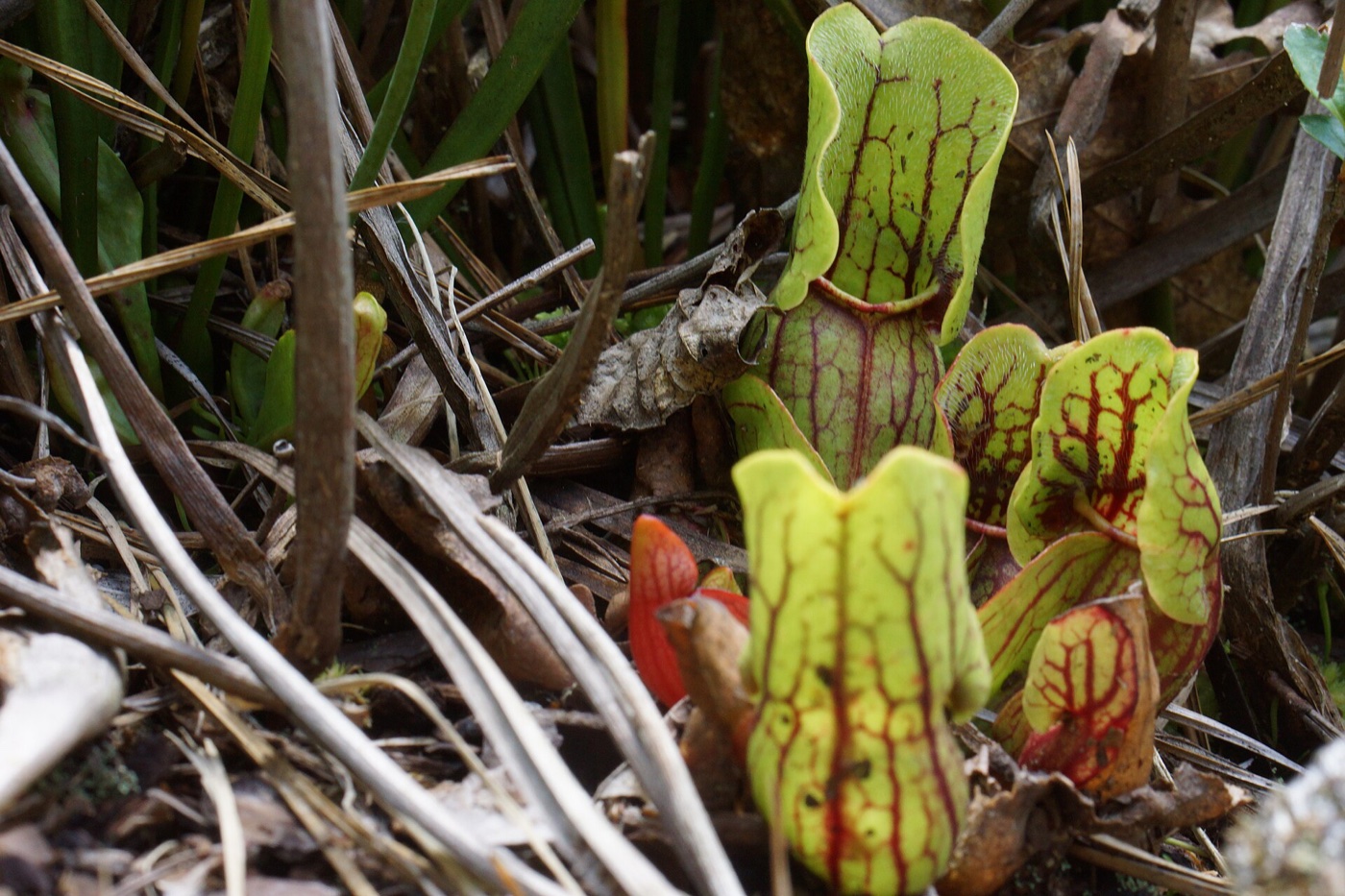
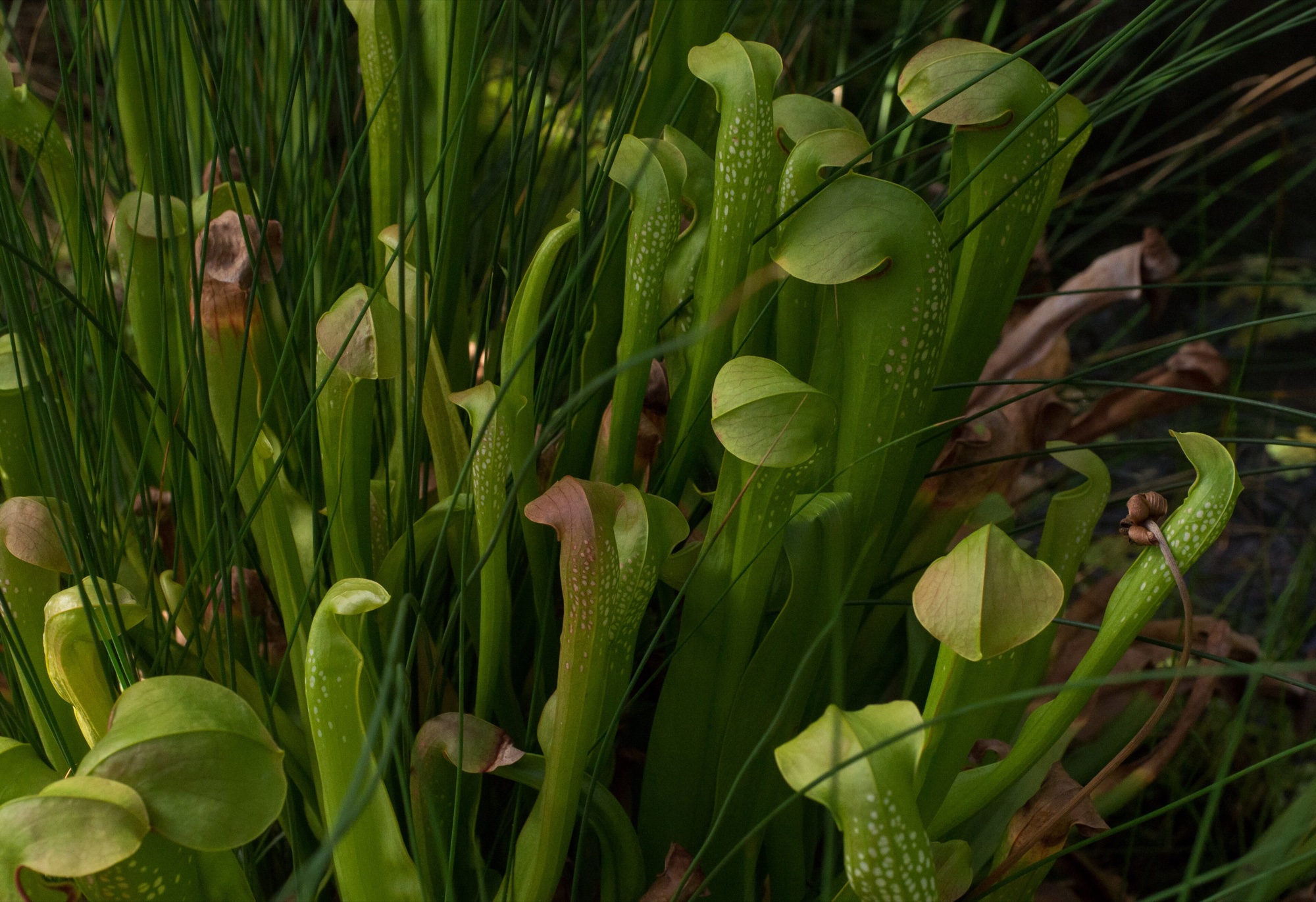
Propagating Sarracenia, the American pitcher plants: cold-stratified seed, division at the end of dormancy and rhizome sections. Division is quickest.
Sarracenia are among the simplest carnivorous plants to multiply because most species branch their rhizomes every year. Division at the end of dormancy is the method to try first and gives flowering plants within a season or two. Spare rhizome from that job can be cut into short sections to sprout more plants. Seed needs a cold, damp winter before it will germinate and takes several years to flower, but it is the only way to make new crosses, and all the species and hybrids are interfertile.
Seed
Moderate
When: Pollinate in spring within a day or two of the flower opening; harvest in autumn; stratify over winter and sow in late winter.
Hand-pollinate the five stigmas, collect the dry capsule in autumn, give the seed four to eight weeks of damp cold, then sow it on the surface of a peat and sand mix in warmth. Plants flower after four to seven years.
- Pollen falls from the anthers onto the inside of the umbrella-shaped style. The five stigmas are tiny hooks at the tips of the style's points. Collect pollen with a natural-bristle brush and dab it on each stigma, on the same flower for a selfing or on another plant for a cross.
- Label every pollinated flower with both parents. Spare pollen keeps for a few weeks in foil in the refrigerator, or about a month frozen, for later-opening flowers.
- The capsule swells over summer, browns and splits in autumn. Dry the seed, and store it in a sealed container in the refrigerator; it stays viable for a year or two, longer if stored well.
- Stratify in a bag of damp chopped sphagnum or peat in the refrigerator for four to eight weeks (five weeks or more for S. purpurea subsp. purpurea). Dry refrigeration does not count.
- Sow sparsely on the surface of 1:1 peat and sand, with at most a sprinkle of sand over the top, and keep the pot bagged or domed at 20 to 25 C (70 to 80 F) in bright indirect light.
- Prick out when seedlings crowd the pot, usually after a year. Light feeding or foliar fertiliser from the second year speeds growth.
- Medium
- 1:1 peat and coarse washed sand, or milled sphagnum.
- Conditions
- Cold and damp for stratification; then 20 to 25 C, humid, bright.
- Time to result
- Germination two to four weeks after stratification. Seedlings reach 2.5 to 5 cm pitchers in their first season; flowering in about four to seven years, three to four with feeding.
Watch out for
- Damping-off and botrytis take seedlings in stagnant, overly wet conditions; sow thinly and ventilate.
- S. minor sets little seed when selfed; cross two clones.
- Selfed seed of the Florida Panhandle forms of S. flava does not come true to the parent variety.
- Recommendations for stratification run from a few weeks to two months; give at least four weeks and err on the longer side.
Sources for this method
- Peter D'Amato, The Savage Garden, Revised Edition (Ten Speed Press, 2013), The American Pitcher Plants chapter, propagation section. ISBN 978-1-60774-410-8
- ICPS: Growing Sarracenia from Seed (accessed )
- Thomas, D. D. (2002). Propagation protocol for North American pitcher plants (Sarracenia L.). Native Plants Journal 3(1): 50-53 (accessed )
Division
Easy
When: During dormancy or just as spring growth starts; not summer or autumn.
Most species add growing points every year and can be pulled apart at the end of dormancy. Give each division roots and, ideally, more than one growing point.
- Unpot the clump, wash off the mix and look for the junctions where branch rhizomes meet the main rhizome.
- Wiggle the pieces apart at those junctions; cut with a clean knife where they will not snap.
- Keep some roots on every piece. Divisions with three or more growing points establish fastest; single-point pieces may sulk for a year or two.
- Trim away brown, dead rhizome and old leaf litter, which harbours mealybugs, and remove emerging flower buds so the division puts its energy into pitchers.
- Pot horizontally with the roots down and the growing points at the surface, water in and return to the tray.
- Medium
- Fresh peat and sand or peat and perlite.
- Conditions
- Normal growing conditions as spring starts.
- Time to result
- Good pitchers the same season from strong divisions; small pieces take a year or two.
Watch out for
- Dividing in full growth shocks the plant and it may not recover until the following year.
- S. purpurea and S. psittacina multiply slowly or not at all, so they rarely give much to divide.
Sources for this method
- Peter D'Amato, The Savage Garden, Revised Edition (Ten Speed Press, 2013), The American Pitcher Plants chapter, propagation section. ISBN 978-1-60774-410-8
- ICPS: Dividing Sarracenia Step-by-Step (accessed )
- Thomas, D. D. (2002). Propagation protocol for North American pitcher plants (Sarracenia L.). Native Plants Journal 3(1): 50-53 (accessed )
Rhizome cuttings
Moderate
When: At the same time as division, while the plant is dormant or just waking.
Sections of healthy rhizome 5 to 7.5 cm long will sprout new growing points when potted horizontally. An old rhizome can also be notched in place to force new shoots for division the following year.
- Check the rhizome is sound: cut tissue should be white, not brown. Trim away any dead portions.
- Cut the rhizome into pieces 5 to 7.5 cm (2 to 3 in) long. Pieces that carry a visible lateral bud and some roots are the most reliable; blind pieces can still sprout from dormant nodes but take longer.
- Dust cut faces with sulphur if you have it, then lay each piece horizontally, roots down, just below the surface with the top exposed.
- Alternatively, scrape the mix off the top of a long old rhizome and cut about halfway through it at several points along its length. New shoots form at the cuts and can be divided off the following year.
- Keep the pot in normal growing conditions and remove flower buds from the resulting shoots.
- Medium
- Peat and sand, topped with live sphagnum if available.
- Conditions
- Normal growing conditions; damp, bright.
- Time to result
- Shoots within the first season; flowering-size plants in one to two years.
Watch out for
- Soft, brown rhizome will only rot; use firm white tissue.
- The most dependable sections carry at least one lateral bud, so treat bud-less pieces as a bonus rather than a sure thing.
Sources for this method
- Peter D'Amato, The Savage Garden, Revised Edition (Ten Speed Press, 2013), The American Pitcher Plants chapter, propagation section. ISBN 978-1-60774-410-8
- Thomas, D. D. (2002). Propagation protocol for North American pitcher plants (Sarracenia L.). Native Plants Journal 3(1): 50-53 (accessed )
- RHS: Sarracenia 'Anne Carlisle' (accessed )
- Rice, B. A. (2004). Leaf pullings: a new way to propagate Sarracenia vegetatively. Carnivorous Plant Newsletter 33(4): 123-126 (accessed )
Sources
References for the facts on this page.
- Peter D'Amato, The Savage Garden, Revised Edition (Ten Speed Press, 2013), The American Pitcher Plants chapter. ISBN 978-1-60774-410-8