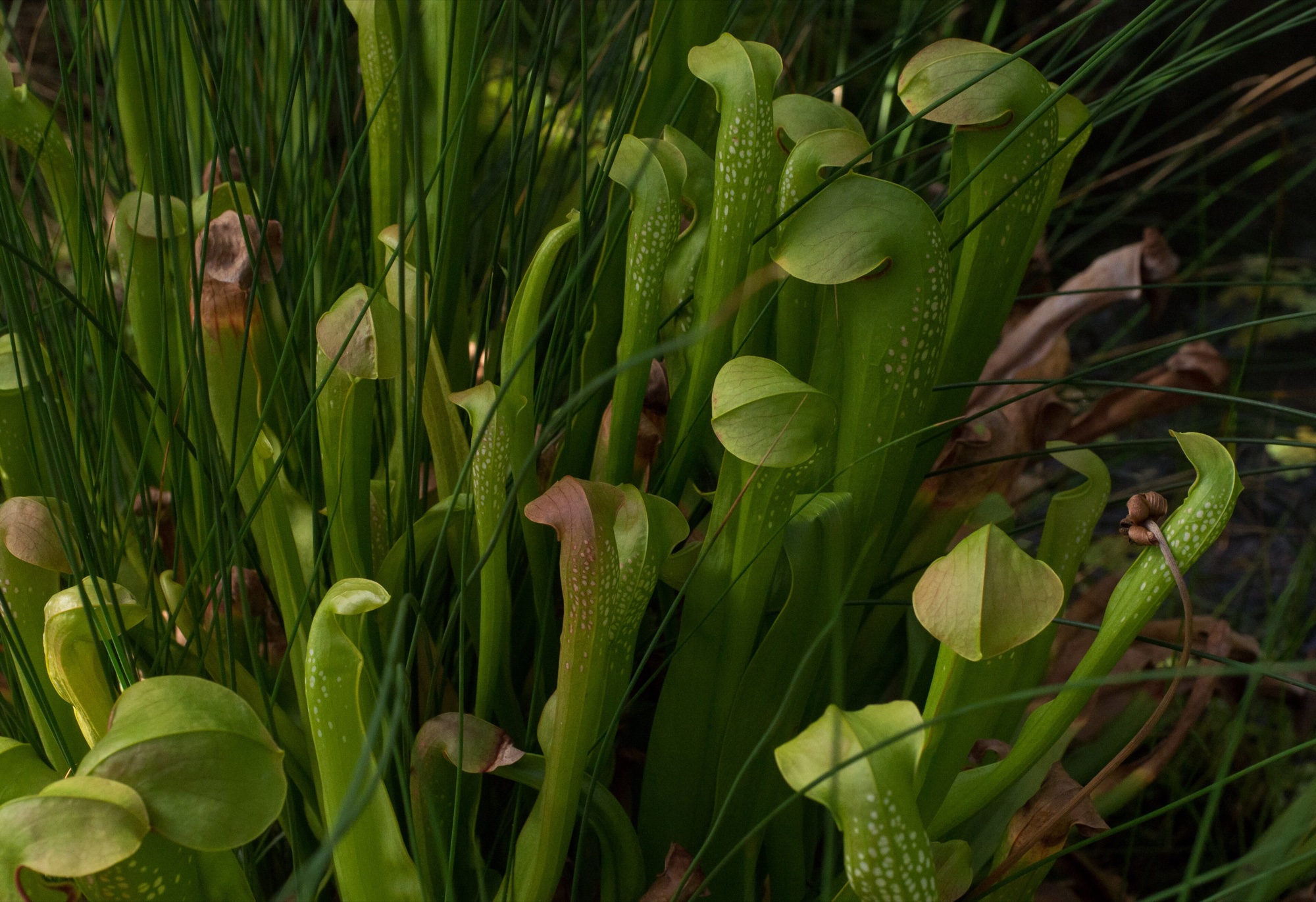
Propagation
Propagating Heliamphora
Propagating Heliamphora, the sun pitchers: divide well-grown plants when they offset, or raise seed that needs no stratification. Division suits home growers.
Heliamphora that are grown well offset on their own, and division of those offsets is the method to try first. Seed is harder: the flowers are built for crossing, with the stigma receptive before the same flower’s pollen is ripe, and the seedlings are small and fragile for years. Most plants in cultivation descend from sterile culture of seed, which is what made the genus affordable; it is not a method for the kitchen table, but it explains why tissue-cultured plants often arrive with many growing points.
Division
Moderate
When: When the plant is growing strongly and temperatures are cool; avoid hot spells above about 26 C (79 F).
Well-grown plants form several growing points and can be pulled or cut apart, each piece with roots. Feed and water beforehand, remove flower stalks, and keep the divisions humid until they resume growth.
- Foliar-feed the plant a week beforehand and water it well the day before.
- Unpot, wash the mix from the rhizome and locate the growing points.
- Snap or cut the rhizome between growing points so that every division keeps some roots. Trim damaged pitchers.
- Pot in the usual open mix, flood the pot a few times and fill the pitchers with pure water.
- Remove any flower stalks. If humidity is below about 85 percent, bag the divisions for a month or until they are visibly growing. A light foliar feed after about two weeks helps.
- Medium
- An open mix such as 3:1:1 long-fibre sphagnum, lava rock and perlite, or half peat and half pumice, perlite and bark.
- Conditions
- Cool, humid, bright; bagged until established.
- Time to result
- Divisions with roots grow away within a few weeks; rootless pieces take months.
Watch out for
- Pitchers and roots are brittle; handle divisions by the rhizome.
- Divide at peak growth in cool conditions. Autumn divisions are often lost over a cool, dim winter, so avoid splitting plants that are about to face a dull, cold season.
Sources for this method
- Peter D'Amato, The Savage Garden, Revised Edition (Ten Speed Press, 2013), The Sun Pitchers chapter, propagation section. ISBN 978-1-60774-410-8
- ICPS: Growing Heliamphora (accessed )
- Ziemer, R. R. (1979). Some personal observations on cultivating the Heliamphora. Carnivorous Plant Newsletter 8(3): 90-92 (accessed )
Seed
Difficult
When: Pollinate as each flower opens, usually winter to spring; sow fresh when the capsule splits two to four months later.
The stigma is receptive for only a few days after a flower opens and before its own pollen is ripe, so pollen has to come from an older flower. Shake pollen out with vibration, brush it on, and sow the resulting seed fresh on sphagnum without stratification.
- Flowers on a scape open in turn over a few weeks. The central green stigma is receptive for a couple of days after the tepals part and then browns.
- Pollen matures after the stigma is past, so take it from an older flower: hold paper under the tepals and touch the anthers with a vibrating tuning fork, or tease the anthers with a fine stick, to release the powdery pollen.
- Brush the pollen onto the green stigma of a freshly opened flower, preferably on a different plant.
- A swelling, browning ovary shows success; seed is released in two to four months.
- Sow at once on the surface of milled sphagnum or peat, bag the pot and keep it in diffuse light.
- Move seedlings to live sphagnum once they have a few leaves, keeping the moss trimmed so it does not overgrow them.
- Medium
- Milled sphagnum or sphagnum peat, later live sphagnum.
- Conditions
- Humid under a bag, bright but diffuse, cool.
- Time to result
- Germination within several weeks, with stragglers for months afterwards; several years to a mature plant.
Watch out for
- Seedlings have a single brittle root; even a drop of water can break it, and they stay tiny for a long time.
- Seed from a selfed clone tends to give weaker plants than the selected clones sold from tissue culture.
- Moss or algae overgrowing the surface smothers seedlings.
Sources for this method
- Peter D'Amato, The Savage Garden, Revised Edition (Ten Speed Press, 2013), The Sun Pitchers chapter, propagation section. ISBN 978-1-60774-410-8
- Ziemer, R. R. (1979). Some personal observations on cultivating the Heliamphora. Carnivorous Plant Newsletter 8(3): 90-92 (accessed )
- ICPS: Growing Heliamphora (accessed )
Sources
References for the facts on this page.
- Peter D'Amato, The Savage Garden, Revised Edition (Ten Speed Press, 2013), The Sun Pitchers chapter. ISBN 978-1-60774-410-8