Propagation
Propagating Darlingtonia
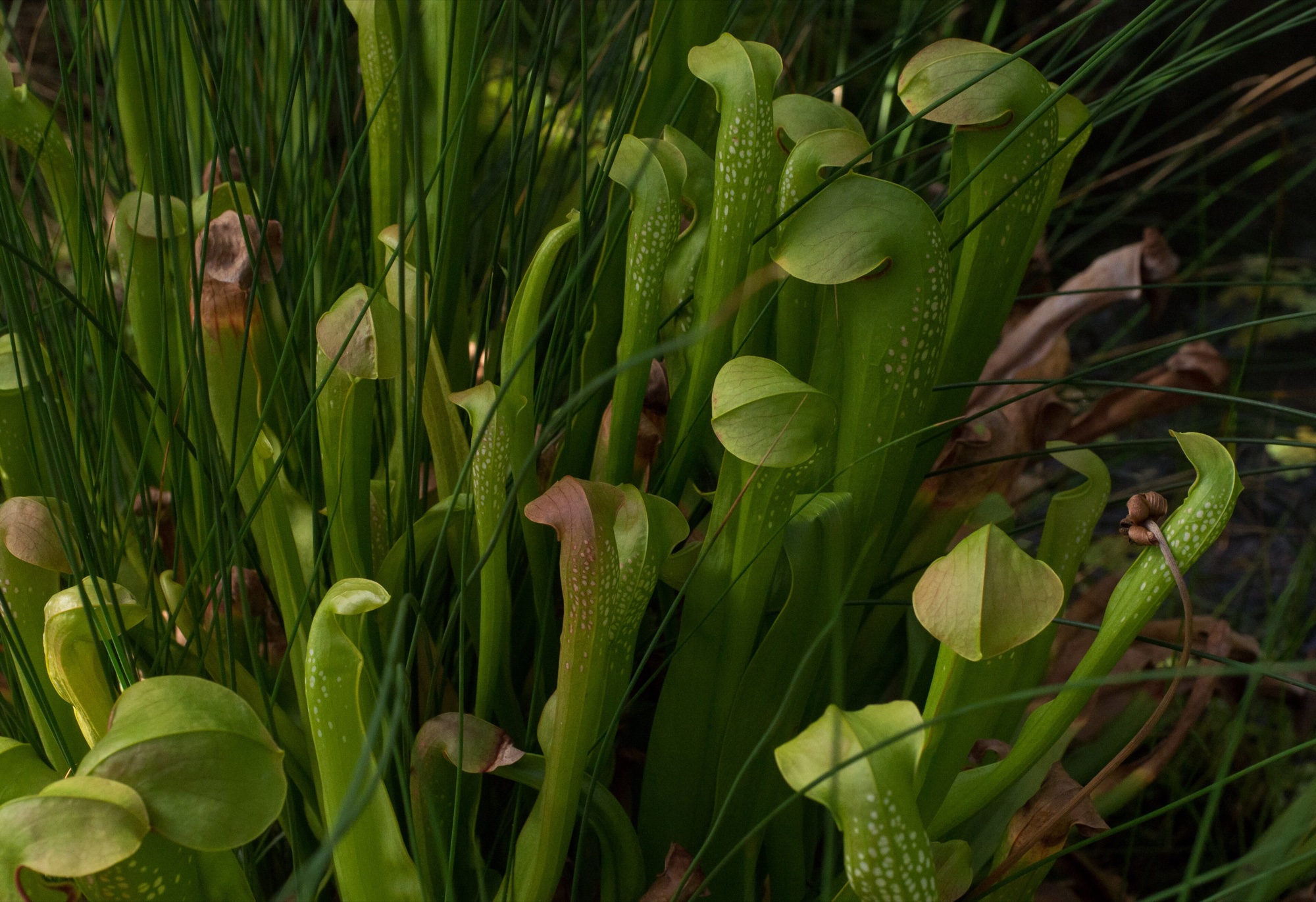
Propagating Darlingtonia, the cobra plant: cuttings of its underground runners are the dependable method. Seed and division also work.
Darlingtonia multiplies itself: a healthy plant pushes out long runners underground, and the plantlets at their tips are the easiest new plants you will get. Try runner cuttings first; they root readily and avoid disturbing the parent. Seed works but needs cold stratification and years of patience, and division suits only crowded clumps. Whatever the method, the rule that governs the species also governs its propagation: keep the roots cool and the water moving.
Stolons and runners
Easy
When: Late winter to early spring, once a plantlet is visible at the tip of a runner.
Mature plants send out long underground runners with small roots along them and a plantlet at the end. Cut a runner into rooted sections and lay them on sphagnum under cover, or simply pot the tip plantlet on its own.
- Do not detach a runner until a plantlet has formed at its tip. In pots the runner may circle the inside several times before it surfaces.
- Free the runner and look for the small roots that form at intervals of roughly 5 to 7.5 cm (2 to 3 in).
- Cut it into sections so that every piece carries some roots, or cut off just the tip plantlet if you want one strong plant rather than several smaller ones.
- Lay the sections flat on live or long-fibre sphagnum in a drained seed tray under a propagation dome.
- Water often with cool water. Pitchers develop from the sections over the following weeks.
- Medium
- Live or long-fibre sphagnum in a drained tray.
- Conditions
- Humid under a dome, cool, bright but out of hot sun.
- Time to result
- New pitchers from the sections within weeks; independent plants by the end of the season.
Watch out for
- The plant has to produce runners first; a plant that is not thriving will not.
- Sections of runner give smaller plantlets than an intact runner tip left to grow.
- Warm, stagnant conditions rot the cuttings; keep the water and the roots cool.
Sources for this method
- Peter D'Amato, The Savage Garden, Revised Edition (Ten Speed Press, 2013), The Cobra Plant chapter, propagation section. ISBN 978-1-60774-410-8
- ICPS: Darlingtonia Vegetative Propagation (accessed )
Seed
Moderate
When: Pollinate in spring; harvest after two to three months; stratify and sow in late winter.
Hand-pollinate the single nodding flower, collect the bristly seed when the capsule browns, give it at least four weeks of damp cold, and sow on sphagnum. Seedlings are slow and need cool roots.
- Part the petals and brush pollen from the anthers on the upper inside of the flower onto the star-shaped stigma that sits below the ovary.
- The capsule straightens, browns and splits after two to three months. Store the seed dry in the refrigerator.
- Stratify in a bag of damp chopped sphagnum in the refrigerator for four weeks or more, or sow and keep the pots cold and damp for the same period.
- Sow on the surface of long-fibre sphagnum in late winter and keep at full humidity under a bag until the seedlings are up.
- Grow seedlings on in the same pot for two to four years before separating them.
- Medium
- Long-fibre or live sphagnum.
- Conditions
- Cold damp stratification; then humid, bright, with the soil kept below 27 C (80 F).
- Time to result
- Germination as spring arrives; pitchers 5 to 10 cm tall after about three years; full-size leaves take many years.
Watch out for
- Warm roots kill seedlings faster than anything else; water with cool water, early in the day.
- Four to eight weeks of stratification is the usual range, and the longer period does no harm.
Sources for this method
- Peter D'Amato, The Savage Garden, Revised Edition (Ten Speed Press, 2013), The Cobra Plant chapter, propagation section. ISBN 978-1-60774-410-8
- ICPS: Growing Darlingtonia californica (accessed )
Division
Moderate
When: Winter dormancy, before new growth.
Large established clumps can be split during dormancy. Each growing point needs its own roots, and new divisions want plenty of cool overhead watering while they settle.
- Unpot the clump in winter and wash the mix away.
- Separate the growing points, keeping roots on every piece and cutting cleanly where they will not pull apart.
- Pot in an airy sphagnum or peat and rock mix in a drained pot and water heavily from above with cool water until growth resumes.
- Medium
- 4:1 long-fibre sphagnum and perlite, or 4:1 peat and perlite, pumice or lava rock.
- Conditions
- Cool, bright, roots kept cold and wet.
- Time to result
- Established by the following summer.
Watch out for
- Division in warm weather, or into a pot that heats in the sun, usually ends in rot.
- Runner cuttings are more reliable; divide only clumps that are genuinely crowded.
Sources for this method
- Peter D'Amato, The Savage Garden, Revised Edition (Ten Speed Press, 2013), The Cobra Plant chapter, propagation section. ISBN 978-1-60774-410-8
- ICPS: Growing Darlingtonia californica (accessed )
Sources
References for the facts on this page.
- Peter D'Amato, The Savage Garden, Revised Edition (Ten Speed Press, 2013), The Cobra Plant chapter. ISBN 978-1-60774-410-8