Propagation
Propagating Pinguicula
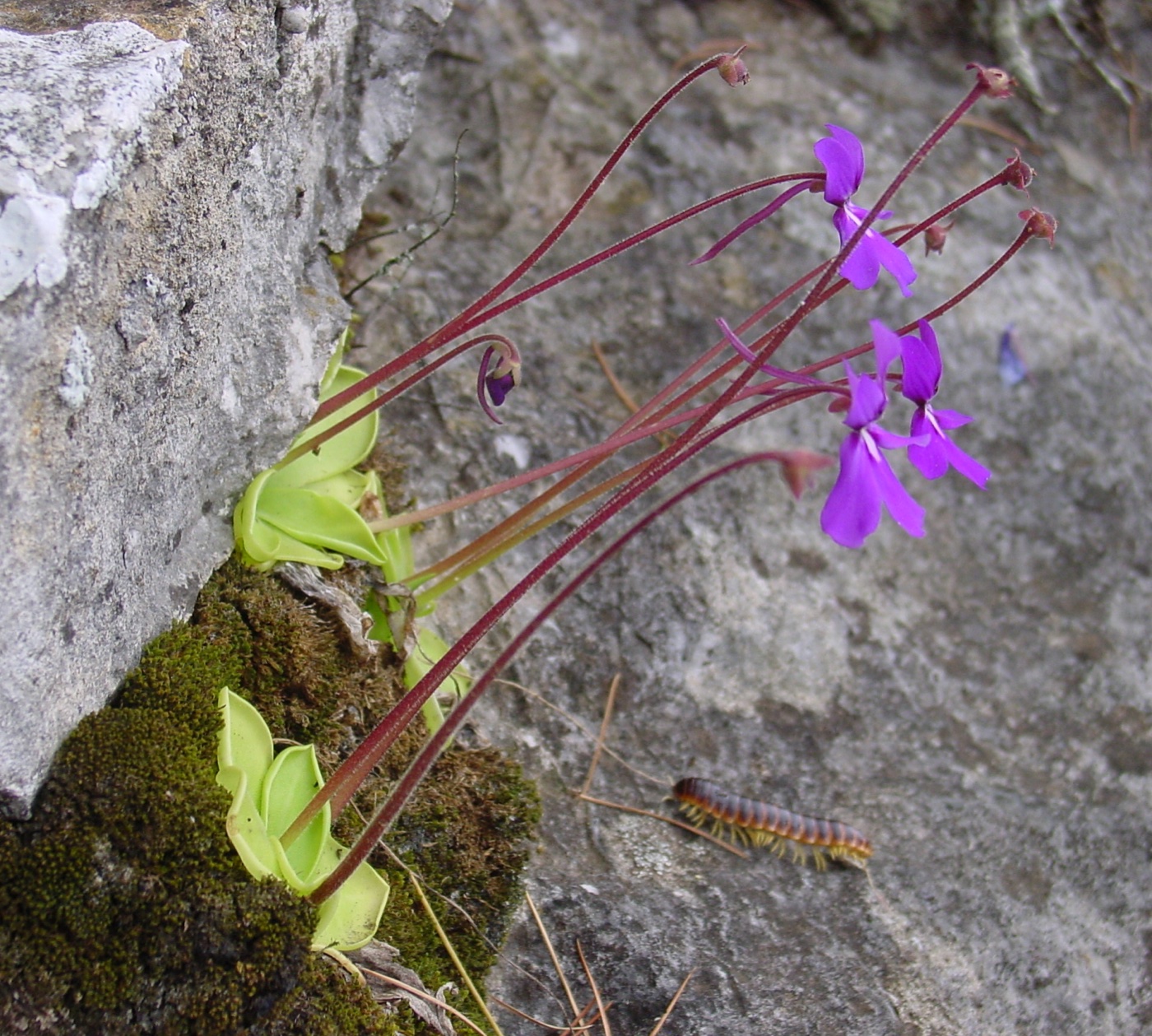
Propagating Pinguicula, the butterworts: by seed, winter leaves of Mexican species, gemmae of temperate species, and runners in one Spanish species.
Butterworts are among the easiest carnivorous plants to multiply, but the right method depends on which group you grow. Mexican species with a succulent winter rosette root readily from those winter leaves, and that is the method to try first. Temperate species that overwinter as a tight bud produce gemmae instead, and leaf pullings do not work on them. Seed works for every species but almost always needs hand pollination, and the cold-temperate species need a winter chill before they will germinate.
Leaf cuttings
Easy
When: Late winter to early spring, just before or as the first sticky summer leaves appear; in the northern hemisphere this is roughly late March to early April for plants on a natural light cycle.
Applies to: Mexican and other tropical species that form a compact succulent winter rosette (P. moranensis, P. esseriana, P. ehlersiae and their hybrids). Species without a true winter rosette, such as P. gigantea and P. agnata, can be pulled at any time of year. Not applicable to temperate species.
Detach a few of the small, dry winter leaves and lay them on a barely damp surface under humid cover. New plantlets form at the base of each leaf within one to two months.
- Choose a plant in its winter rosette and ease a leaf sideways with fine forceps or your fingers so it comes away whole at the base. Rough handling can shatter the rosette, so work gently.
- Take no more than about half of a rosette's winter leaves from any one plant. Since the plant is already out of its pot, this is also a good moment to repot it.
- Lay each leaf upper side up on the surface of the growing mix; do not bury it. A lidded clear container or sealed bag keeps humidity near 100 percent without wetting the leaves.
- Keep the mix just damp. If leaves shrivel, mist lightly; if any start to rot, open the container for more air and remove the rotten ones.
- Give medium-bright light out of direct sun. Pot the plantlets on once the mother leaf has withered and the new plants have roots.
- Medium
- The species' usual mix, or a damp 1:2 vermiculite and perlite mix, kept just moist rather than wet.
- Conditions
- Humid cover, medium-bright indirect light, ordinary room temperature.
- Time to result
- Plantlets and roots at the leaf base within a few weeks to two months; mature plants in roughly a year to eighteen months.
Watch out for
- Leaves kept too wet rot before they root; leaves kept too dry shrivel.
- Thin summer leaves, or winter leaves taken too early, tend to rot rather than sprout.
- Some large-leaved clones rot readily as cuttings and are better raised from seed.
- Rooting hormone and vitamin B1 treatments give no benefit on these leaves; untreated leaves produce more and larger plantlets.
Sources for this method
- Peter D'Amato, The Savage Garden, Revised Edition (Ten Speed Press, 2013), The Butterworts chapter, propagation section. ISBN 978-1-60774-410-8
- Mexican Pinguicula Leaf Pullings (International Carnivorous Plant Society) (accessed )
- Growing Mexican Pinguicula (International Carnivorous Plant Society) (accessed )
Seed
Moderate
When: Pollinate when flowers open; sow as soon as the capsule splits. Seed of cold-temperate species needs a winter chill before it will germinate.
Nearly all species need hand pollination, because the stigma is a flap that covers the anthers. Transfer pollen to the outer face of that flap, collect the seed when the capsule browns and splits, and sow it at once on the surface of the usual mix.
- Insert a toothpick or fine brush into the flower past the stigma flap, sweep upward as you withdraw it to pick up pollen, then dab the pollen on the front face of the stigma. If that fails, tear the flower open to reach the anthers and stigma directly.
- For a cross, place pollen only on the stigma face of the seed parent so you do not self-pollinate it by pushing past the flap.
- Watch the capsule swell over several weeks; collect seed the day it splits.
- Sow sparsely on the surface of the usual mix, with the top centimetre sifted finer. Do not bury the seed. Keep damp, humid and bright; a plastic bag helps in dry rooms.
- For cold-temperate species, either sow outdoors in autumn or mix the seed into damp peat in a small bag and keep it in the coldest part of the refrigerator for 8 to 12 weeks before sowing in spring.
- Medium
- The species' usual mix; warm-temperate species prefer a peatier mix.
- Conditions
- Mexican and warm-temperate species germinate at about 15 to 25 C (60 to 80 F); damp, not sodden, under humid cover. Cold-temperate species need a cold period first.
- Time to result
- Mexican species typically germinate in 4 to 8 weeks; warm-temperate species in 2 to 4 weeks; cold-temperate species germinate in spring after their chill.
Watch out for
- Seed loses viability within months even when refrigerated; sow fresh.
- Seed of cold-temperate species needs 8 to 12 weeks between about minus 10 and 5 C before it will germinate; do not skip the chill.
- P. lusitanica and P. villosa self-pollinate and can seed themselves around a collection; everything else needs a hand. Warm-temperate species are short-lived, so save seed every year.
Sources for this method
- Peter D'Amato, The Savage Garden, Revised Edition (Ten Speed Press, 2013), The Butterworts chapter, propagation section. ISBN 978-1-60774-410-8
- Growing Mexican Pinguicula (International Carnivorous Plant Society) (accessed )
- Growing cold temperate Pinguicula (International Carnivorous Plant Society) (accessed )
- Growing warm temperate Pinguicula (International Carnivorous Plant Society) (accessed )
Gemmae
Easy
When: Late winter or very early spring, just before growth starts; gemmae can also be separated in autumn when the bud is fully formed.
Applies to: Temperate species that overwinter as a tight bud (hibernaculum); P. grandiflora and P. corsica produce the most, up to about fifty per plant.
Temperate butterworts form small brood buds around the base of the winter bud. Separate them with forceps and set each one upright on the usual mix, where it grows into a new plant over the season.
- Lift the dormant plant and locate the small buds, each a couple of millimetres long, clustered around the base of the main winter bud.
- Pick each one off with forceps and press it lightly, pointed end up, into the surface of the mix. Space them out; a gemma left under the parent's spreading spring leaves usually dies for lack of light.
- Return the parent to its pot. Keep everything cold and just damp until spring growth begins; winter buds rot if kept wet and perish at room temperature.
- Medium
- The species' usual mix, kept just damp through the rest of the winter.
- Conditions
- Cold winter conditions as for the parent; gemmae are frost-hardy but not tolerant of warm, wet storage.
- Time to result
- Plants can be close to mature by the end of the first season; flowering usually takes two to three seasons.
Watch out for
- Gemmae left in place are overgrown by the parent in spring and mostly fail; separate them before the rosette opens.
- Too much water in winter rots both hibernacula and gemmae.
Sources for this method
- Peter D'Amato, The Savage Garden, Revised Edition (Ten Speed Press, 2013), The Butterworts chapter, propagation section. ISBN 978-1-60774-410-8
- Steiger, J. F. 1975. The Pinguicula species of the temperate growth type and their cultivation. Carnivorous Plant Newsletter 4(1) (accessed )
- An Alternative Cultivation Method for European Pinguicula (pinguicula.org) (accessed )
Stolons and runners
Easy
When: Runners form in summer after flowering; the connection to the parent usually decays over winter, so separate the young plants in autumn or the following spring.
Applies to: P. vallisneriifolia only, a temperate species from southern Spain that spreads by runners instead of gemmae.
This one species sends out runners that root a few centimetres from the parent. Let the plant produce them, then lift the rooted offsets once the link to the mother plant has withered.
- Grow the plant on in a wide, shallow container so runners have room to root 3 to 10 cm from the parent.
- Once the runner has died back, or at repotting in early spring, lift the offset with its surrounding medium and pot it separately.
- Treat the offset exactly as the parent: cool, shaded, humid and always moist.
- Medium
- The species' usual limestone-based or sandy mix.
- Conditions
- As for the parent: cool, shaded and moist, with cold winters.
- Time to result
- Offsets are independent plants by the following season.
Watch out for
- Disturbing roots in summer, after flowering, sets the plants back; wait for dormancy.
Sources for this method
- Peter D'Amato, The Savage Garden, Revised Edition (Ten Speed Press, 2013), The Butterworts chapter, temperate species section. ISBN 978-1-60774-410-8
- Steiger, J. F. 1975. The Pinguicula species of the temperate growth type and their cultivation. Carnivorous Plant Newsletter 4(1) (accessed )
Sources
References for the facts on this page.
- Peter D'Amato, The Savage Garden, Revised Edition (Ten Speed Press, 2013), The Butterworts chapter. ISBN 978-1-60774-410-8
- International Carnivorous Plant Society growing guides for Pinguicula (accessed )