Plant group
Albany pitcher plant
Cephalotus, the Albany pitcher plant: one species from Western Australia with thumb-sized lidded pitchers. Rewarding once settled, but sensitive to rot.
CephalotusAlbany pitcher plant · Western Australian pitcher plantFamily Cephalotaceae · One species, Cephalotus follicularis
Care at a glance
IntermediateNot hard to keep alive once its conditions are right, but slow to find them, slow to grow, and quick to rot or mildew when something is wrong.
- Where they grow
- A short stretch of the south coast of Western Australia around Albany and Walpole, in peaty soil beside swamps and streams.
- Trap
- Pitfall: small lidded pitchers in a ground-level rosette
- Light
- Bright light with several hours of direct sun, or strong grow lights; a south-facing windowsill in the northern hemisphere. Sun colours the pitchers red; shade keeps them green and larger.
- Water
- Rain, distilled or reverse-osmosis water. Keep the medium damp but never waterlogged: a shallow tray of about 1 cm (half an inch) that is allowed to empty, or careful top watering. Stagnant, saturated medium rots the roots.
- Growing medium
- Sandy and open: roughly one part peat or chopped sphagnum to four parts coarse sand; the classic half-and-half peat and sand works at first but breaks down.
- Temperature
- Mild: roughly 5 to 32 °C (41 to 90 °F), with cooler winters. Tolerates a touch of frost but not freezing, and resents long hot spells.
- Humidity and airflow
- Moderate household humidity is fine with some air movement; stagnant humid air brings mildew.
- Dormancy
- A winter slowdown rather than a true dormancy; growth slows or stops in cool, short days and the plant can look poor until spring.
- Feeding
- Catches ants and small insects on its own. A dried bloodworm or a single slow-release pellet in a pitcher that holds fluid is enough; keep fertiliser out of the medium.
Start with
- Cephalotus follicularis, typical formThere is only one species, and an ordinary tissue-culture or division-raised plant is the cheapest way to learn its habits.
- Cephalotus follicularis 'Hummer's Giant'A registered large-pitchered clone, sold widely; the same care, with pitchers about twice the usual size on a mature plant.
Watch out for
- Plant collapses suddenly, often after looking fine: root or rhizome rot from waterlogged or stale medium; unpot, cut away black tissue and repot in fresh mix.
- Grey or white powder on leaves and pitchers: mildew in stagnant, humid, dim conditions; improve light and airflow and treat promptly.
- Only flat leaves, no pitchers: too little light, heavy feeding, or the cool-season leaf type doing what it does.
- Green pitchers with no red: not enough sun; not a fault in itself.
- Brown scale insects on the leaf bases and pitchers: the usual pest; remove by hand and treat if needed.
- Pitchers shrivelling and lids drooping: the medium has dried, or the roots have failed.
What they are
Cephalotus follicularis is a genus and a family of one. It is a small evergreen rosette growing from a creeping underground rhizome, with pitchers that sit on the ground facing outward, each usually about 3 cm (1.2 in) tall and at most around 6 cm (2.4 in) except in a few selected clones. Despite the look, it is not related to Nepenthes or to the American pitcher plants; DNA places it in the order Oxalidales, nearer to wood sorrels than to any other carnivore, and its pitchers evolved on their own. Its digestive enzymes were recruited from the same stress-response proteins that unrelated carnivorous plants also pressed into service.
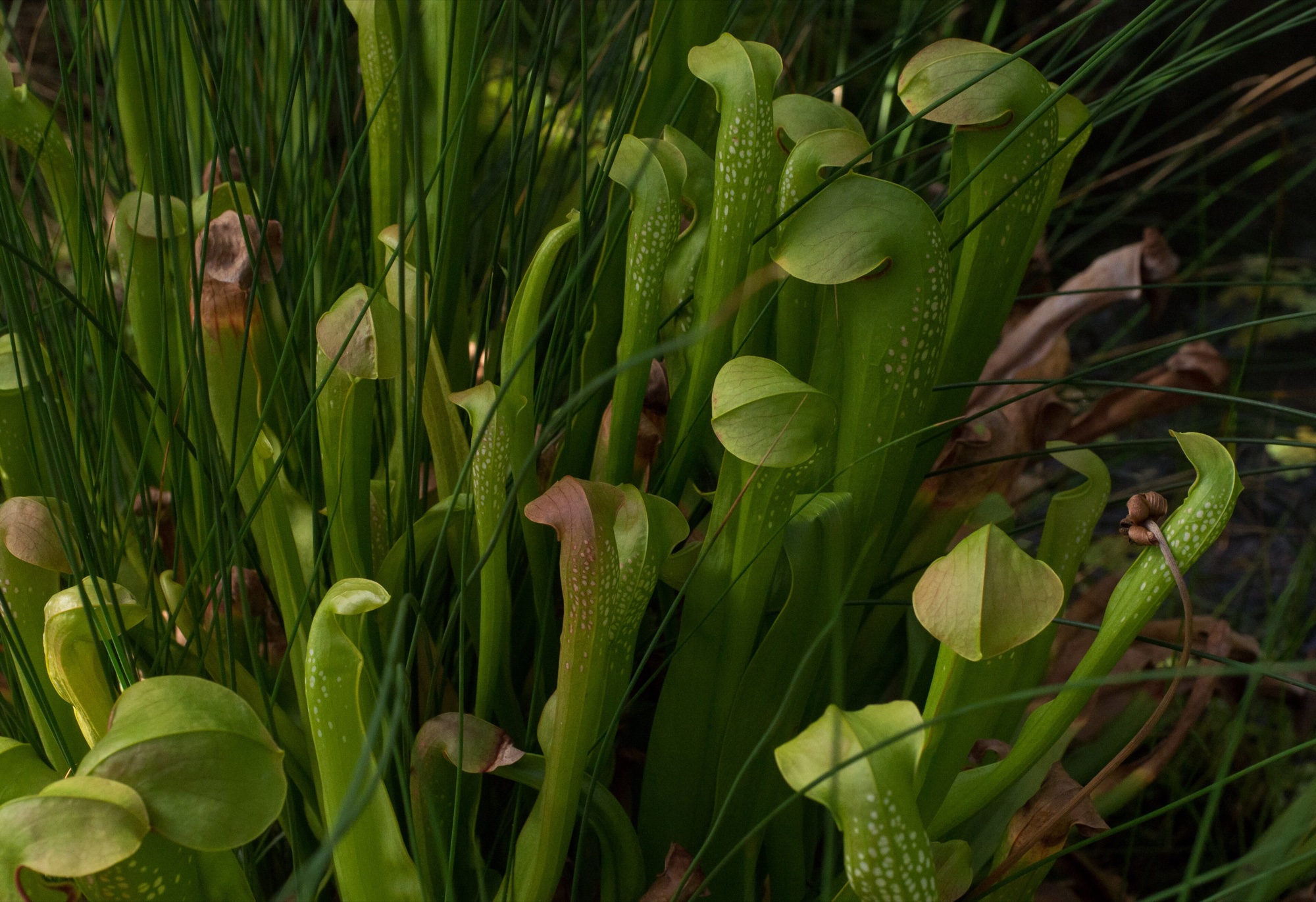
The pitcher is a modified leaf. Nectar on the ribs down the front and near the mouth draws insects, mostly ants, up to a rim of smooth, slippery ridges edged with small downward-pointing teeth; inside the mouth a second rim, or collar, overhangs the fluid. The lid carries translucent windows and, when the plant dries, can droop over the mouth to protect the fluid.
The plant makes two kinds of leaf. Flat, glossy, non-carnivorous leaves appear first, and pitchers follow as the season warms. Temperature and day length together set the leaf type: at 25 °C (77 °F) the plant made almost nothing but pitchers, at 15 °C (59 °F) almost nothing but flat leaves. Deep shade or heavy fertiliser also pushes a plant towards flat leaves. A spike up to about 40 cm (16 in) carries small petal-less white to greenish flowers from midsummer into autumn in the wild; they are rare on cultivated plants and absent under constant day length.
Where they grow
The species is confined to a short stretch of the south coast of Western Australia, almost entirely around Albany and Walpole, growing in peaty and sandy soils beside swamps, ditches and slow streams and on mossy seepage banks close to the sea. It is not listed as threatened.
The climate is Mediterranean and maritime, with wet, cool winters and warm, drier summers, and the plants are kept damp year-round by seepage rather than by standing water; Albany’s seasonal swing in temperature and day length is the cue the plant has evolved to read. Two things follow: the plant expects a seasonal rhythm, cool and short-dayed in winter, warm and long-dayed in summer; and it expects water moving through sandy ground, which is the clue to the long argument about watering.
The range in cultivation
With one species, variety comes from clones. Seventeen cultivars are registered; the ones a newcomer will meet are ‘Hummer’s Giant’ (2001), a large form whose mature pitchers reach 6 to 7.5 cm (2.5 to 3 in), and dark selections such as ‘Eden Black’ (2007) and ‘OG Black’ (2020) that turn deep purple in strong light. All need the same care.
The plant is slow; seedlings grow roughly 2.5 cm (1 in) a year and take years to make pitchers big enough to feed, so a well-grown specimen is priced accordingly.
Growing them
Light
Bright light with real sun. A south-facing windowsill is best and east or west windows are sometimes adequate; well-coloured plants can be grown under strong white LED lighting for 14 to 15 hours a day. Full sun and partial shade both work. Sun turns the pitchers red and purple; a shaded plant stays green and makes larger pitchers.
Water
This is the contested point. Wild plants sit in damp but seeping ground, so treat it as a fen plant, never stagnant. One method is pots standing in about 1 cm (0.4 in) of water, flushed from above now and then to clear salts, with every part of the plant at least 5 cm (2 in) above the water line. Some growers use the tray but let it dry out before refilling, holding that constantly saturated medium rots potted roots even though some wild colonies grow on trickling slopes. The approaches agree more than they appear to: all want damp, none want waterlogged, and the difference is whether you get there with a shallow tray that empties or by top watering a sandy mix. This page recommends the shallow standing tray, with the drier end of the range for anyone using a peat-heavy mix.
Growing medium
Open and sandy. The usual half peat, half sand mix works for a season or two and then breaks down and accumulates salts; about 20 percent peat or chopped sphagnum to 80 percent coarse sand is better, with a 1 cm (0.4 in) layer of pure sand on top to keep moss off. A third peat and two thirds sand is the same idea with more organic matter. Use a drained pot deep enough for the rhizome; an undrained container is the quickest way to lose the plant.
Temperature
Mild. The range is 5 to 32 °C (41 to 90 °F); the plant takes a chilly night but not a freeze. It survives brief light frost to about -2 °C (28 °F), prolonged very hot weather can kill it, and plants kept warm all year eventually rot, which fits the plant’s cool coastal home.
Humidity
Ordinary room humidity suits a plant on a windowsill; humidity domes are for cuttings only. What the plant cannot stand is still, saturated air in dim light: it is highly susceptible to mildew, whole collections have been lost to fungus, and powdery mildew follows stagnant humid air and low light.
Dormancy
Not a true dormancy, but a distinct rest. In cool, short winter days growth slows or stops and the previous year’s leaves and pitchers die back as new ones form; flowering stems die back and new growth comes from at or below the soil, so a plant can look poor for a while. Give the rest deliberately, with cooler temperatures and a shorter photoperiod, even under lights; summer warmth with short days produces malformed leaves, so keep temperature and day length moving together.
Feeding
Ants in the wild. Feed dried bloodworms, small insects or a single slow-release pellet into pitchers that hold fluid; very dilute urea-free orchid fertiliser in the medium is tolerated if the pot is flushed regularly, and an occasional foliar mist is another option. Seedlings are killed by feeding too early or too much. Little and seldom is the rule.
Common mistakes
Waterlogging a peat-heavy mix, which rots the rhizome; the plant can look healthy right up to the day it collapses. A dim, closed terrarium, where mildew arrives first and rot second. Repotting often; it is slow to recover, so repot only when the medium has broken down, at the end of the winter rest. Judging it by its first season, when a new plant may make only flat leaves. Feeding the soil. Leaving scale insects unchecked on the tough leaf bases. And assuming it is dead when the old growth browns in autumn; wait for the spring crowns.
Which to start with
A typical-form plant, as large as you can afford, because small plants are the ones most often lost while they settle. Give it a bright windowsill, a sandy mix, a shallow tray that is allowed to empty and some patience: it needs experimentation at first and becomes very low maintenance once its conditions are found. ‘Hummer’s Giant’ is the obvious second plant, bigger in every part but no different in its needs. Dark clones need the strongest light to show their colour and are no easier.
Going further
The reward for a settled plant is a clump of several crowns, and that is the moment to propagate. Division and crown cuttings are the quickest route, giving new plants within six months; leaf pullings with their pale base intact grow plantlets in weeks to months; root cuttings are faster still; and seed is slow, needing six to ten weeks cool and damp at about 15 °C (59 °F) before it germinates. The Cephalotus propagation entry gives the steps. A growing log is more useful for this plant than for most, because the watering balance that works in your room is something only you can find, and dormancy and seasonal changes explains the winter rest.
Sources
References for the facts on this page.
- International Carnivorous Plant Society: Growing Cephalotus follicularis (accessed )
- International Carnivorous Plant Society: Evolution, Cephalotus (accessed )
- Western Australian Herbarium, Florabase: Cephalotus follicularis Labill. (accessed )
- Western Australian Herbarium, Florabase: Albany pitcher plant (plant in focus) (accessed )
- Botanical Society of America: Cephalotus follicularis, the Albany pitcher plant (accessed )
- Australian National Botanic Gardens: Cephalotus follicularis (Australian plants on stamps) (accessed )
- Royal Horticultural Society: Cephalotus follicularis (accessed )
- Fukushima, K. et al. 2017. Genome of the pitcher plant Cephalotus reveals genetic changes associated with carnivory. Nature Ecology and Evolution 1: 0059 (Europe PMC record) (accessed )
- Fukushima, K., Narukawa, H., Palfalvi, G. and Hasebe, M. 2021. A discordance of seasonally covarying cues uncovers misregulated phenotypes in the heterophyllous pitcher plant Cephalotus follicularis. Proceedings of the Royal Society B 288: 20202568 (accessed )
- Carnivorous Plant Names Resource (Jan Schlauer): Cephalotus (accessed )
- Peter D'Amato, The Savage Garden, Revised Edition (Ten Speed Press, 2013), The West Australian Pitcher Plant chapter. ISBN 978-1-60774-410-8